
The review layer between claim preparation and submission.
A calm, evidence-first workspace for spotting potential gaps and giving human reviewers a clear next action.
Know what to investigate before the claim leaves your desk.
Import a claim and its supporting documents. Surface missing evidence, selected coding inconsistencies and authorization-related gaps using configured checks.
- ✓ A queue organized around open findings
- ✓ Clear issue titles and categories
- ✓ No fabricated rejection probabilities
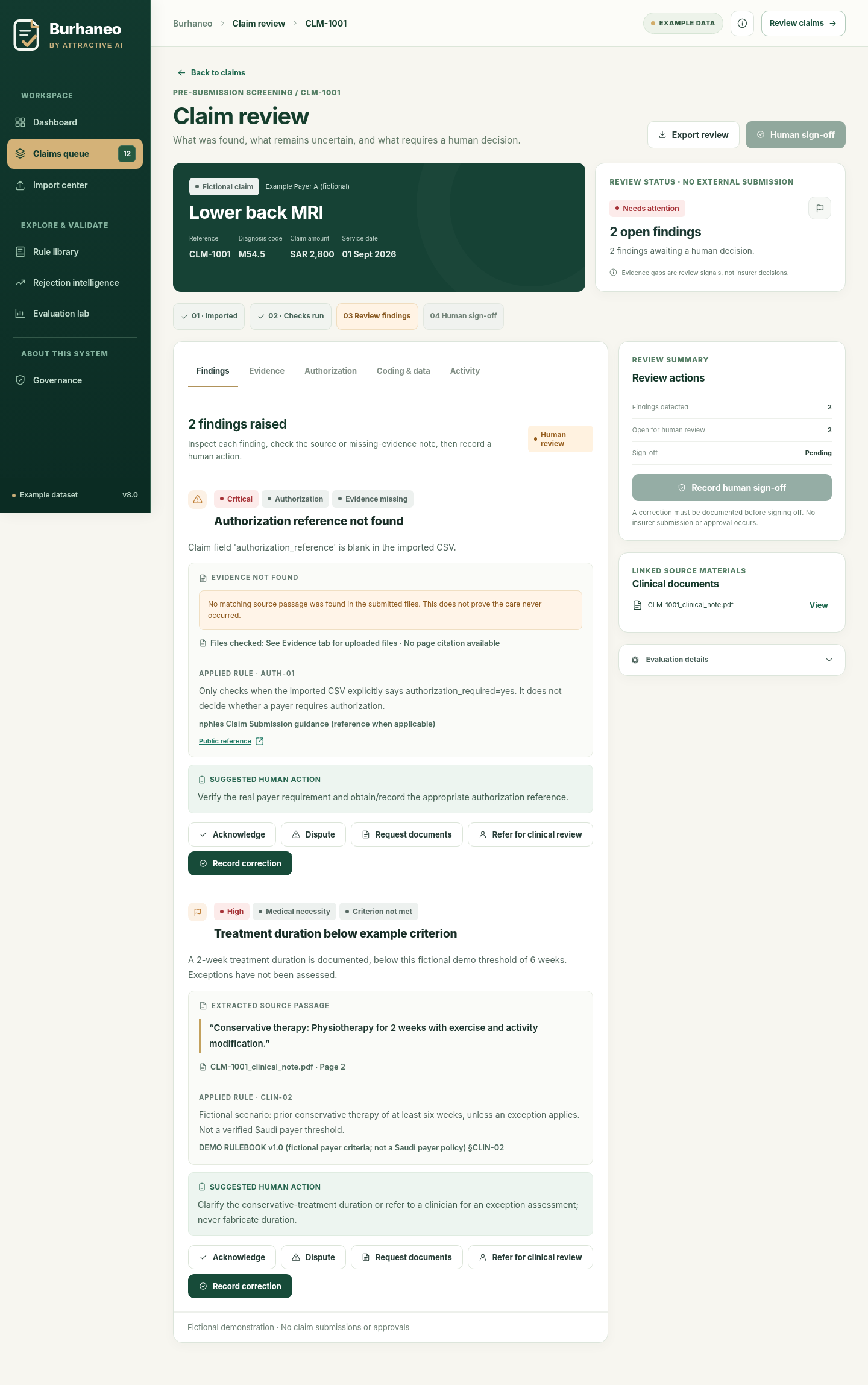
Every finding needs a reason.
A screening result should let the reviewer verify the evidence and understand when a criterion is uncertain or simply unproven by the submitted file.
Source passage
Document and page references when a passage supports the finding. No fabricated quotations.
Versioned criteria
Applicable payer, service, version and effective date when an authorized rule is configured.
Explicit uncertainty
Missing information is not automatically an unmet clinical requirement. Exceptions stay reviewable.
The last action is always a human one.
Reviewers acknowledge findings, request source material, refer complex cases for clinical review, or record an externally verified correction. No action silently approves or submits a claim.
Import
A claim enters the review queue.
Inspect
Staff check source passages and rules.
Resolve
Request, refer or document a correction.
Sign off
A responsible reviewer records the internal decision.
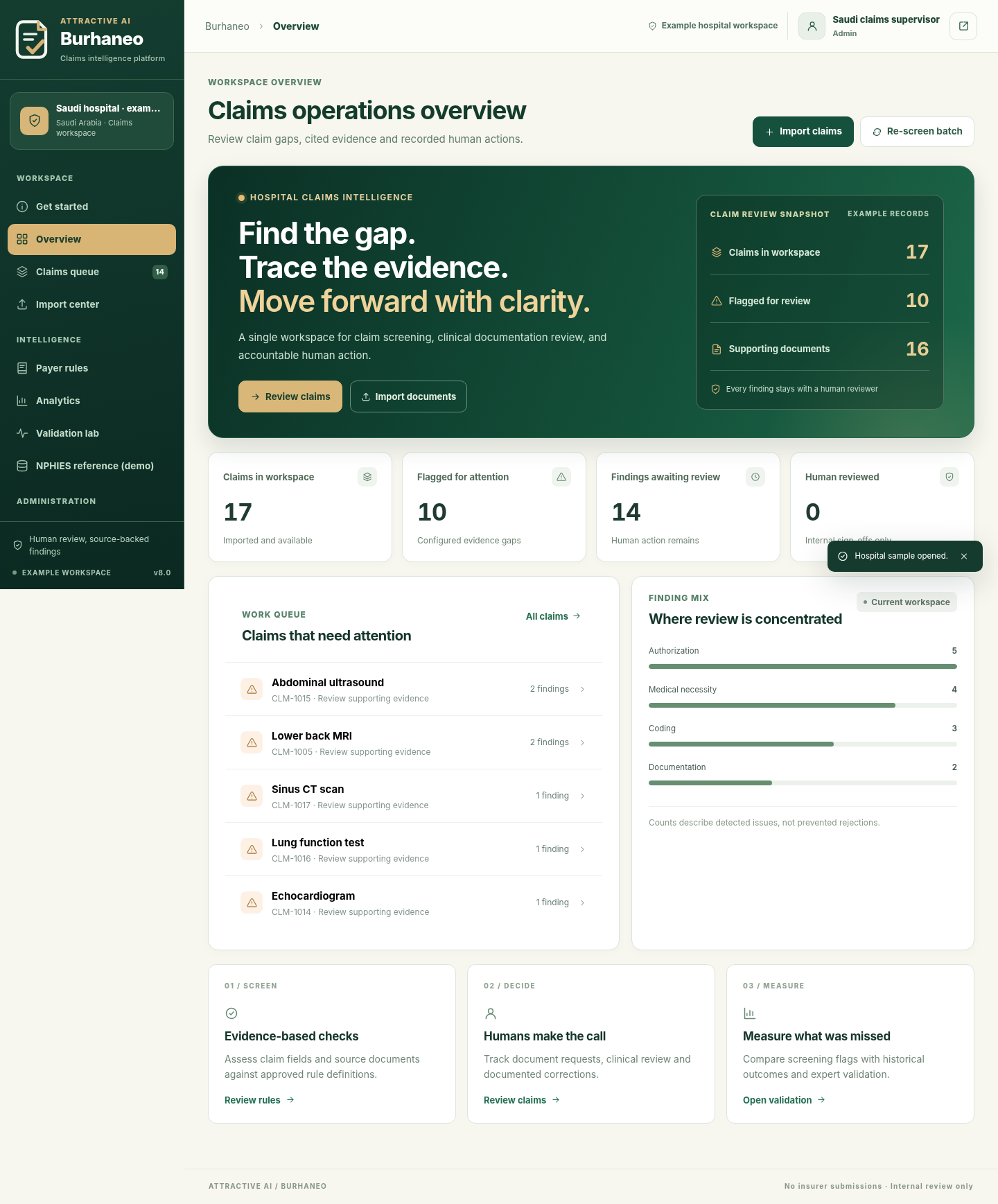
See the workload behind the findings.
Structure review queues, rule changes, open actions and retrospective outcomes so RCM leaders can see what needs attention.
Current demonstration analytics use fictional cases. Hospital-specific performance must be validated using approved historical data.